Addressing Extreme Weather Challenges in Rural South Carolina
South Carolina’s rural communities face increasing vulnerability to climate hazards that compound existing risks and exacerbate impacts. When severe weather strikes, disrupted supply chains, power outages, and road closures cut off access to food, medications, and essential services. Food pantries and other community centers represent an underutilized community asset in disaster preparedness, serving as trusted institutions that can support communication, resource coordination, and recovery before and after a disaster.
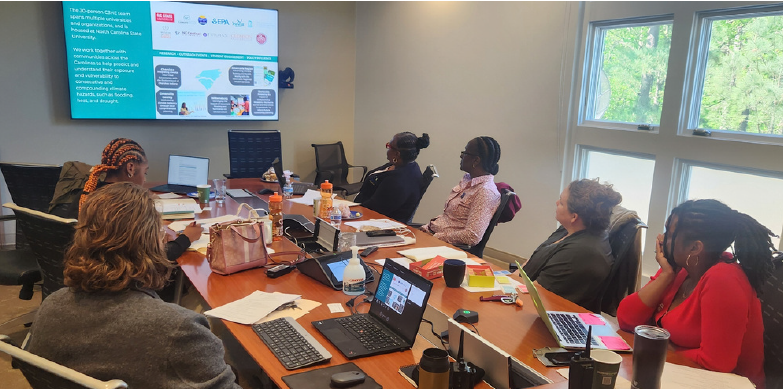
Through the Carolinas RISA’s Small Grant program, RISA researchers established, supported, and resourced community partnerships to identify vulnerabilities, strengthen local capacity, and advance more resilient and sustainable futures across rural South Carolina.
The South Carolina Aquarium (SCA) is collaborating with the Gullah Geechee Cultural Heritage Corridor Commission (GGCHC) to convene workshops in rural coastal communities (Navassa and the Ten Mile Community) to explore extreme weather risks and identify potential flood locations for nature-based interventions. The GGCHC is following up with a corridor-wide resiliency plan that will include community-centered solutions to current and future extreme weather.
The CMD’s Food Pantry is working to address food system disruptions in Williamsburg County due to flooding. They developed a hazard preparedness plan in partnership with the Carolinas RISA. This plan establishes clear protocols for maintaining food operations during tropical storms, a critical capability for a pantry serving one of South Carolina's most food-insecure communities in the state.